Don’t board the sinking ship of secularism – Reflections on comments by Dr Mohammad Akram Nadwi
Don’t board the sinking ship of secularism – Reflections on comments by Dr Mohammad Akram Nadwi
This week saw extraordinary scenes in Istanbul, as the Aya Sofia Masjid witnessed its first Jummah Prayer for over 85 years since its transformation to a museum by the arch secularist Mustafa Kemal. The sounds of the Adhan from the minarets were joined by the sounds of Takbirs in the streets, as hundreds of thousands of people crowded into the square outside the masjid, to be part of the congregation. Another sign, we pray of the Islamic revival across the world.
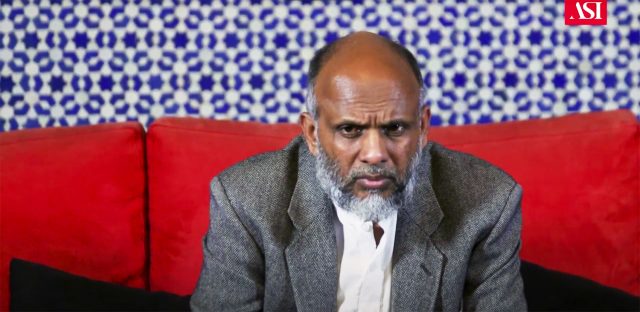
In the same week, I was struck by a recent on-line interview with Shaikh Dr Mohammad Akram Nadwi hosted by Shaikh Dr Yasir Al Qadhi [1].
The discussion centred on many subjects – and whilst there are many things that can be addressed, my focus is on the section where Dr Akram was asked for his comment about the movements and trends in Muslim majority lands who want to establish a political base for Islam. The answers to the questions were brief, presumably in order to cover the ground over a limited period of time – which, given the complexity of the subject matter, made them seem rather shallow in their substance.
Nonetheless, a simplistically expressed answer doesn’t necessarily make an answer wrong.
But, similarly, a blatantly incorrect answer expressed by an academic steeped in learning of the Islamic sciences does not make the answer correct, even if that answer was unchallenged in any substantial way by another academic who has also studied the Islamic sciences extensively. The views expressed highlight that we need to have a deeper understanding of the effects of colonialism in the Muslim world – effects that remain till today especially in terms of thoughts and values. Colonialists left their own systems in place as well as western-educated elites to serve their interests. Moreover, when Muslims who live or have studied in the west comment on many issues it becomes apparent that they too are similarly affected.
A doctor who looks at symptoms superficially, without considering the underlying and long standing causes, will most likely make an incorrect diagnosis and offer incorrect remedies.
Similarly, looking at society in a superficial way by its current ‘symptoms’, without looking at the root causes – which is that the Muslim world is ruled by un-Islamic systems, implemented by an elite that serves their own interests and the interests of foreign powers, whilst being detached from the general public – will lead to an incorrect judgment about those people and the problem that needs solving. Such a thinking leads many to conclude that people are not ‘good’ Muslims, or that they need to work on their Iman, instead of realising that Muslims do not live under ‘good’ systems and that their Iman is detached from their political life, even if it became central in their personal life.
Dr Akram’s response – based upon courses that he has taught on Islamic politics for some time – was that any politics is based on the ‘norms’ of that country e.g. British politics is built on British norms – and that the politics of that country has to support and develop those norms. The ‘norms’ of Islam, he said, are built upon the Iman in Islam, but do not exist today in Muslim countries, or are not very strong. He then went on to say that if those ‘norms’ are not very strong in the society and you try to bring Islam with a political change ‘you create tensions in the society’, and that you divide people into those who want Islamic change and those who do not. His conclusion was that for the time being the best political system for Muslim countries was secularism. He said that ‘to make the society secular, where the state is fair for all its citizens, it gives a chance to Islam and other religions equally, then Muslims can work with freedom’.
He clarified that he wanted a ‘proper secular society’, saying that ‘the secular society we have got in some of the Muslim countries are not secular – they are anti-secularism. They don’t give freedom, they take away the freedom. They use the term secular but they are not secular…If secularism in Muslim countries was applied as it is in America or Europe it would be much more beneficial for the Muslims living there than anywhere else.’
He contrasted sentiments at the time of the founding of Pakistan – the hatred towards British colonialism, the desire for a Pakistan independent of British rule through which a Khilafah (i.e. Islamic rule) would be established – with today, saying that if you invited people in Pakistan today to come and live in Britain nobody would stay in Pakistan – because he said ‘people don’t want Islam’ – they want a society in which they can prosper, which is ordered and peaceful. He argued that in Muslim societies what is needed now is prosperity, order and peace – then, he said, ‘you work harder and maybe in the future something changes but at the moment that will be the best solution.’
There was a very ‘gentle push back’ from the host (so gentle that it could give the impression that the lack of challenge from someone with both an academic and Islamic background was actually the ‘silence of consent’ – but I wonder if he was struggling with how to question a person who was both his guest and his teacher more robustly without seeming impolite, which resulted in no effective challenge). Dr Qadhi asked how Muslims could reconcile such a secular system with the fact that it would allow for ‘legislating for promiscuity and alcohol’.
He did not point out that such laws are imposed from the top upon populations who have not called for them. Nor did he mention that those laws are part of a push to impose secular liberal norms across the world. Rather, the answer once again was that ‘Islam is based on norms. Muslim lands do not have those norms. Muslims don’t want that. So when you bring shariah law you create tension – which harms people and make them fight. We need time where people have freedom, where they can learn Islam, study Islam, then maybe in the future if people are “good believers” – at the moment people don’t want Islam.’
In his final comment on this subject Dr Akram said: ‘You cannot impose a law on people that they do not want. (In) Western democracy there was a big struggle. Maybe they want the name of Islam but the details of Islam nobody wants.’
Reflections
To hear such a respected scholar calling for secularism in the Muslim world was a shock – regardless of the caveat of ‘for the time being’.
We are not living in the nineteenth century, when people were blinded by the technological progress of the Industrial Revolution – but in the twenty-first century when many political thinkers within the ‘real’ secular world struggle as to how and why the secular system is fraught with so many problems.
Every time a crisis emerges – such as the war in Afghanistan or in Iraq; or the Global Financial Crisis of 2008; or the Brexit debacle in the UK; or the Trump Presidency; or the systemic racism that requires people to scream out that ‘Black Lives Matter’; or the Covid-19 Pandemic – we hear criticisms and concerns about ‘freedom and democracy’ being imposed on people; or the UN only serving the interests of global powers; or the rise of nationalism; or the wealth gap between rich and poor; or the failures of capitalism are born by the masses; or the institutionalised racism across the western world; or the failure of global leadership; or the lack of trust in politicians and ‘experts’.
Serious political thinkers even question the secular philosophical ideas that underpin the systems that have created so many problems – but conclude they know of no better systems than this, ‘the least worst option’. Thinkers in the ‘real’ secular world struggle to understand why people in their societies are not very happy – and wrestle with anxiety and depression despite having a much better material standard of living than other societies.
Is this the kind of ‘real’ secular system that Dr Akram would like to see Muslims calling for in the Muslim world? I doubt it. But these are but some of the realities of the ‘real’ secular world.
Yet there is more that needs to be discussed.
There were some contradictions worth pointing out; and some highly questionable premises and assumptions about the merits of secularism as a political system and public opinion in Muslim countries, which are worth unpicking.
Finally, the impression left by Dr Akram’s views reflect a tragic situation today, that so many academic, scholars and activists appear to have such a low horizon when it comes to thinking about Islam in the world today.
His premises about a secular political system are highly questionable. Secularism of the type he proposed – such that people should be free to express their religious views in the Muslim world, and to learn and enquire about Islam without being subject to any other forces – seemed almost utopian! It is a form of secularism that has never existed anywhere except in the myths of the minds of its advocates.
The idea that people are ‘free’ in secular capitalist societies is patently absurd. Mainly because the most prominent fruit from secular political thought is the capitalist economic system, which then influences political systems in an extremely coercive direction. People become enslaved to the whims of rich men and corporations, whether they realise it or not. The idea that such a system would lead to a flourishing of Islamic values is utterly unconvincing.
Moreover, ‘real’ secular societies of the kind that he espouses never permit free enquiry and expression to the extent that would ever allow support for an Islamic authority in the Muslim world, because this would mark an end to the supremacy of the secular ‘religion’ . Dr Akram seemed not to appreciate that secularism is not a neutral arbiter of religions but a belief system that has assumed supremacy over religions.
If the underlying assumption is that that some sort of ‘benevolent secularism’ will create a space for Muslims to study Islam and create ‘Islamic norms’ before the implementation of Islam at a political level, then this assumes that this space will be free from secular interference. Yet over the decades the educational curricula in the Muslim world has been controlled so as to produce the secular personalities that don’t challenge the status quo.
The influential Rand organisation reinforced this longstanding tradition in their report ‘The Muslim World after 9/11’ [2] which recommend the direction of the education policy based on ‘religious moderation’ and ‘political stability’ (i.e. don’t cause ‘tensions’!).
The report states “Promoting educational reform is therefore an important component of a shaping strategy in the Muslim world. Despite the importance of madrasa reform, there have been few concrete plans to design and implement specific changes in these schools, or much consideration of how these schools fit within the broader reform of public education systems that can help produce more desirable economic, political, and social outcomes. There is an urgent need for the United States and other concerned countries and international institutions to support the reform of religious schools to ensure that these schools are able to provide a broad modern education. This reform is key to breaking the cycle of radicalized madrassas producing cannon fodder for radical and terrorist groups. In some countries, governments lack the capability to monitor the activities that are being conducted in the madrassas. The United States could provide assistance to governments to establish or strengthen higher education accreditation boards that monitor and review curricula in both state and private schools.”
It is evident from the above that there will be no neutral space for Muslims to learn the correct concepts regarding Khilafah, Jihad, Shariah and other fundamental matters which are essential to create Islamic ‘societal norms’ as a precursor to Islamic rule.
This limitation of space has become increasingly obvious in the way that the gradual march of secularism in Britain, for example, has superseded the dominance of Christian values in no less a way than revolutionary secularism did in France. In recent years Britain replaced its multicultural model of soft integration with a muscular liberal model because the former had allowed a space for the younger generation of Muslims to rediscover their Islamic identity rather than to embrace a wholly secular one.
Hence, the ‘real’ secular societies that Dr Akram appeared to welcome would essentially create capitalist – and probably liberal – Muslim societies that would not allow for anything to unseat secularism from its supreme position of authority.
The second questionable premise that warrants discussion is that Muslims in the Muslim world ‘don’t want Islam’. How exactly did Dr Akram come to this conclusion?
If a Muslim is supposed to think the best of his brother, then this is a sad indictment of the whole Ummah? Those who monitor the trend towards revival in the Muslim world over decades would disagree with him, seeing an increasing desire for Islam. One might understand it if he, as an academic, were to offer some empirical data to counter the numerous polls and surveys over the years that give an entirely different perspective for much of the Muslim world.
I do agree with Dr Akram on two matters. The first is that you cannot impose a law on people that they do not want. This is true. The political party I belong to, Hizb ut-Tahrir believes that part of the Prophetic method to establish an Islamic authority, is to build a public opinion for Islam prior to a change of ruling system – and so for decades the party has tried to work for both, even declining to assume authority when we deemed that the threshold of public support and awareness had not been met.
It may be true that it would create tensions if someone imposes an Islamic order over a society that rejects the idea. But it is also true that it is not necessary for 100% of the people in any society to accept the idea. Not every person in Yathrib welcomed the transformation to Al Madinah al Munawwarah. Not every person in South Africa welcomed the fall of apartheid, or in Russia the fall of the Soviet Union. Yet, just as in Dr Akram’s example of the ‘struggles’ in western society that gave rise to the secular order, those societies went through struggle and ‘tension’ that he so wishes to avoid.
He seemed to respect the struggles and tensions (which included much blood shed) that led to the rise of a secular political order – or that which led to the foundation of the United States, seeking its independence from colonial Britain. Yet, the Muslim world should not, he appeared to suggest, undergo any tension of ideas, or political struggle to achieve a change. Why assume this for an Islamic trajectory, but not for a secular one? Why argue it is easier to embrace ‘real’ secularism, which is utterly inconsistent with the peoples’ religious beliefs and historical experience, than to adopt Islam?
Aside from the obvious example of the Makkan phase of the Seerah of the Prophet ﷺ that was full of tension and struggle, his caricature of Muslim societies as being split between people who want Islam and those who do not does not convey an accurate picture. For the most part it is the ruling class that oppose any change – a small number of people who serve their own interests and those of colonial powers.
The second matter I agree with Dr Akram is that people generally want safe, ordered societies in which their families can prosper – or at least not starve. Yet I do not believe that Muslims in the Muslim world see this as contradictory to a desire for Islam in the way Dr Akram does. They have learned that a world dominated by secularism has imposed chaos and disorder in their societies – as well as huge loss of life.
That brings me to my final point – the low horizon that some people have when it comes to thinking about Islam in the world today. Why is it assumed order and stability comes from secularism and cannot come from Islam? Is it not the fruit of the implementation of the Islamic system that people have access to justice, that wealth is circulated, that peoples’ security is maintained?
Why else would Allah ﷻ say that He has promised these through the establishment of Islam under Khilafah?
وَعَدَ اللَّهُ الَّذِينَ آمَنُوا مِنكُمْ وَعَمِلُوا الصَّالِحَاتِ لَيَسْتَخْلِفَنَّهُمْ فِي الْأَرْضِ كَمَا اسْتَخْلَفَ الَّذِينَ مِن قَبْلِهِمْ وَلَيُمَكِّنَنَّ لَهُمْ دِينَهُمُ الَّذِي ارْتَضَىٰ لَهُمْ وَلَيُبَدِّلَنَّهُم مِّن بَعْدِ خَوْفِهِمْ أَمْنًا ۚ يَعْبُدُونَنِي لَا يُشْرِكُونَ بِي شَيْئًا ۚ وَمَن كَفَرَ بَعْدَ ذَٰلِكَ فَأُولَٰئِكَ هُمُ الْفَاسِقُونَ –
Allah has promised those who have believed among you and done righteous deeds that He will surely grant them succession [to authority] upon the earth just as He granted it to those before them and that He will surely establish for them [therein] their religion which He has preferred for them and that He will surely substitute for them, after their fear, security, [for] they worship Me, not associating anything with Me. But whoever disbelieves after that – then those are the defiantly disobedient. 24:55
Has modern Muslim academia become such that Shari’ah rules are viewed detached from their targetted aims, so that there is no political fruit seen in them? If that is the case, then that is a sad state of affairs.
Conclusions
A call for secularism in the Muslim world is not only not Islamic, but a step back for the Muslim world. It was the call that Ali Abdel Raziq made in the 1920s that was roundly rejected by the Ulema of the time as being against the understanding of Islam. It was the mission of Mustafa Kemal in Turkey, whose efforts have been unravelling over the decades.
It is like seeing someone boarding a sinking ship.
To hear such arguments unchallenged from an academic and scholar who is respected by so many is concerning – and hence warranted addressing.
It is said that Dr Akram encourages his students to think critically. If so, I hope they follow their teacher’s advice and scrutinise what they are taught, not to merely nod their heads in polite agreement. This matter does not require a great deal of intellectual rigour to see the many fallacies – nor to see the perils to Muslims in general from following such ideas.
An honest appraisal of secularism and liberal ideas should lead one to conclude they are the cause of the misery in the world – a world that has been dominated by these ideas, unrivalled for decades.
Similarly, an understanding of Islam that looks at the Shari’ah of Islam as a much needed alternative, would lead us to want to see Islam implement under a political authority for the genuine desire to rescue humanity from the darkness it lives under today – to continue the mission to all the worlds, entrusted to the Final Messenger ﷺ .
الر ۚ كِتَابٌ أَنزَلْنَاهُ إِلَيْكَ لِتُخْرِجَ النَّاسَ مِنَ الظُّلُمَاتِ إِلَى النُّورِ بِإِذْنِ رَبِّهِمْ إِلَىٰ صِرَاطِ الْعَزِيزِ الْحَمِيدِ
Alif, Lam, Ra. [This is] a Book which We have revealed to you, [O Muhammad], that you might bring mankind out of darknesses into the light by permission of their Lord – to the path of the Exalted in Might, the Praiseworthy – 14:1 –
By Dr Abdul Wahid
He has been published on the websites of Foreign Affairs, Open Democracy, the Times Higher Educational Supplement and Prospect Magazine.
[1] https://www.youtube.com/watch?v=j6w0lOpUHsA&feature=youtu.be
[2] https://www.rand.org/content/dam/rand/pubs/monographs/2004/RAND_MG246.pdf
Dr Mohammad Akram Nadwi
Dr Mohammad Akram Nadwi is a world-renowned scholar of Indian origin, who has now resided in England for many years. He is recipient of the Allama Iqbal prize for contribution to Islamic thought and is the Principal and co-founder of Al-Salam Institute.
After receiving advanced in-depth training in the traditional Islamic disciplines at Nadwat al-Ulama (Lucknow, India) and receiving a PhD in Arabic literature from Lucknow University, he became a Research Fellow at the Oxford Centre for Islamic Studies where he conducted research for a number of years (including on the topics of hadith and Sufi orders in India). He has published widely in Urdu, Persian, Arabic and English. This includes translations (such as his work on Shah Wali Allah), editions of Arabic texts (such as a renowned critical edition of Usul al-Shashi in Hanafi jurisprudence), and original monographs (on Islamic law, hadith sciences and figures such as Abu Hanifa and Sayyid Abul Hasan Ali Nadwi). As co-founder of Al-Salam Institute, he continues to teach short courses and Advanced Level modules on the Islamic Scholarship Programme.
He is also author of Al-Muhaddithat: The Women Scholars in Islam, a monumental 53-volume biographical dictionary which charts some of the significant contributions made by female hadith scholars over the centuries. Ref: https://alsalam.ac.uk/